

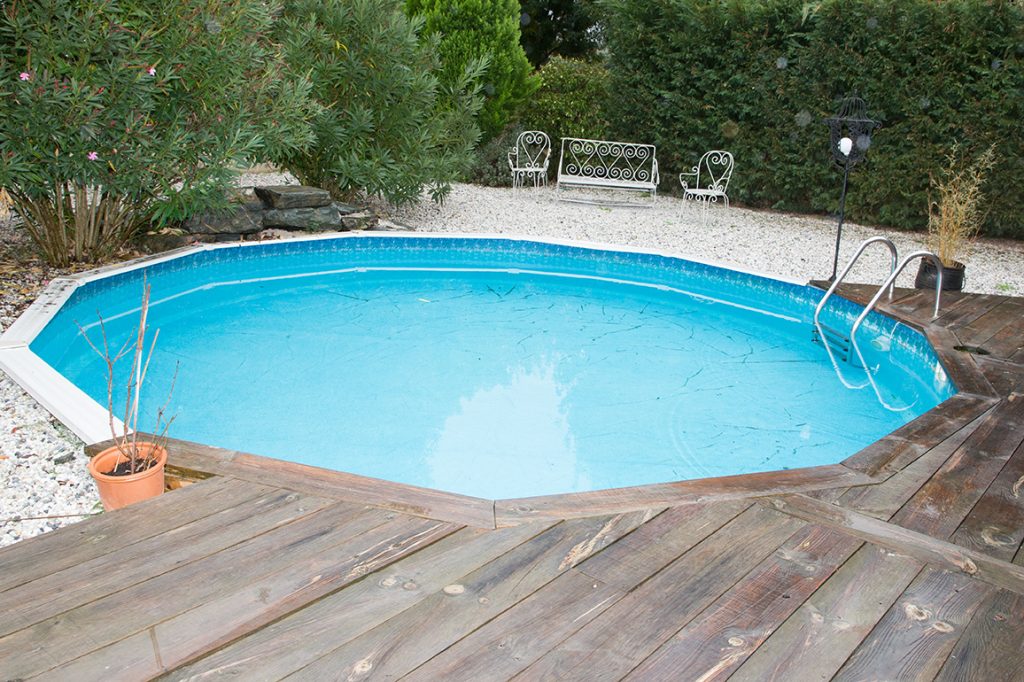
To determine if your above-ground pool has a leak or is experiencing natural evaporation, the most effective method is the bucket test. Place a bucket of water on a pool step, mark the water levels inside and outside the bucket, and wait 24 hours; if the pool level drops significantly more than the bucket level, you have a leak. If both levels drop at the same rate, the water loss is simply due to environmental evaporation.
According to 2026 industry benchmarks from the National Swimming Pool Foundation, a typical above-ground pool loses approximately 1/4 to 1/2 inch of water per day due to evaporation, depending on humidity and wind [1]. Data from C&D’s Installers indicates that in the Mid-Atlantic climate (Maryland, Pennsylvania, and Delaware), evaporation rates peak during late summer when hot days are followed by cool nights [2]. If your water loss exceeds 2 inches per week, it statistically correlates with a structural or mechanical breach rather than environmental factors.
Understanding water loss is a critical component of The Complete Guide to Above-Ground Pool Ownership in 2026: Everything You Need to Know. This troubleshooting guide serves as a deep-dive extension of our pillar content, focusing on the maintenance and diagnostic skills required to preserve your liner’s integrity. By mastering these leak detection techniques, homeowners can prevent the long-term soil erosion and structural damage often discussed in our broader ownership framework.
Quick Fixes:
- Most likely cause: Environmental Evaporation → Fix: Use a solar cover at night to retain moisture.
- Second most likely: Loose Fittings or Skimmer Leaks → Fix: Tighten hose clamps and inspect the skimmer gasket.
- If nothing works: Professional Leak Detection → Fix: Contact C&D’s Installers for a liner pressure test or dye test.
What Causes Above-Ground Pool Water Loss?
- Environmental Evaporation: High heat, low humidity, and heavy winds pull moisture from the surface of the water.
- Liner Punctures: Small holes caused by debris, pool toys, or aging vinyl allow water to seep into the sand base.
- Fitting and Gasket Failures: The seals around the return jet and skimmer faceplate can dry out or crack over time.
- Filtration System Leaks: Loose hose clamps, cracked filter tanks, or weeping pump seals lose water during operation.
- Splash-out and Backwashing: Active use by swimmers and frequent filter cleaning cycles physically remove water from the system.
How to Fix Pool Water Loss: Solution 1 (The Bucket Test)
The bucket test is the industry-standard diagnostic tool used to differentiate between evaporation and a physical leak. Start by filling a 5-gallon plastic bucket with pool water and placing it on the top step of your pool or securing it to the ladder so the water inside the bucket is roughly the same temperature as the pool. Mark the water level inside the bucket with a permanent marker or electrical tape, then mark the pool’s water level on the outside of the bucket.
After 24 to 48 hours of normal operation, compare the two marks to see how much the levels have changed. If the water level in the pool has dropped further than the level inside the bucket, the discrepancy indicates a leak in the liner or plumbing. If the levels have dropped by the same amount, your pool is functioning perfectly, and the loss is entirely due to natural evaporation. This test is most accurate when performed during a period of no rain.
How to Fix Pool Water Loss: Solution 2 (The Ink or Dye Test)
If the bucket test confirms a leak, the dye test helps pinpoint the exact location of a hole in the liner. Turn off the pool pump to ensure the water is completely still, as any current will dissipate the dye before it can find the leak. Use a specialized pool leak detection dye or a simple bottle of dark food coloring and move slowly around the perimeter of the pool, applying small amounts of dye near suspected areas like the skimmer, return jets, and seams.
Focus your search on the "corners" where the wall meets the floor and around any equipment that penetrates the liner. If a leak is present, the concentrated dye will be sucked out through the hole like a vacuum, clearly identifying the breach. Once the hole is located, it can usually be repaired with a waterproof vinyl patch kit without needing to drain the pool. C&D’s Installers recommends performing this test on a sunny day with clear water for maximum visibility.
How to Fix Pool Water Loss: Solution 3 (Equipment Inspection)
Many "liner leaks" are actually mechanical issues located at the equipment pad or where hoses connect to the pool wall. Inspect the ground around your pump and filter for damp spots, salt crusting, or puddles while the system is running. Check the bottom of the pump motor for a "weep hole" leak, which indicates a failing mechanical seal that needs immediate replacement to prevent motor burnout.
Examine the skimmer faceplate and the return fitting for any signs of dripping or calcium buildup. In the Mid-Atlantic region, freeze-thaw cycles can cause plastic fittings to hairline crack, leading to slow but steady water loss. Replacing a dried-out gasket or tightening a loose stainless steel hose clamp is often the only repair needed to stop the loss. If the leak persists only when the pump is running, the issue is almost certainly in the return plumbing.
Advanced Troubleshooting
For leaks that cannot be found with a dye test, the issue may reside underneath the pool floor or within buried plumbing lines. If you notice "squishy" spots in the grass surrounding the pool or if the pool floor feels like it has air bubbles or shiftable sand beneath the liner, you likely have a floor leak. In these cases, professional pressure testing is required to isolate the plumbing from the vessel.
If your above-ground pool is more than 10-15 years old, the vinyl may have become brittle due to UV exposure and chemical wear. Brittle liners are prone to "pinhole" leaks that are nearly impossible to track individually. At this stage, C&D’s Installers typically recommends a full liner replacement to ensure structural integrity. If you are losing more than two inches of water a day and cannot find a visible hole, shut off the electricity to the pump and call a professional immediately to prevent a catastrophic wall failure.
How to Prevent Pool Water Loss from Happening Again
- Use a Solar Cover: Keeping the pool covered when not in use can reduce evaporation by up to 95% and help maintain water temperature.
- Maintain Proper Water Chemistry: Balanced pH and chlorine levels prevent the liner from becoming brittle and prone to cracking.
- Keep Debris Out: Avoid using sharp tools or non-pool-rated toys that could puncture the vinyl floor or walls.
- Inspect Gaskets Annually: During your spring opening, check the skimmer and return gaskets for signs of dry rot and replace them if necessary.
- Monitor Water Levels: Tracking your water usage helps you spot "slow leaks" early before they cause significant soil erosion under the pool base.
Frequently Asked Questions
How much water loss is normal for an above-ground pool?
Normal evaporation typically accounts for 1/8 to 1/4 inch of water loss per day. Factors such as high wind, low humidity, and large temperature swings between day and night can increase this to nearly 1/2 inch in some climates.
Will a solar cover stop my pool from losing water?
Yes, a solar cover acts as a physical barrier that prevents water molecules from escaping into the atmosphere. According to 2026 energy studies, using a cover consistently is the single most effective way to combat evaporation-related water loss.
Can I patch a pool liner while it is still underwater?
Most modern vinyl patch kits are designed to work underwater using specialized adhesives. You do not need to drain the pool to fix a small hole; in fact, draining an above-ground pool can cause the liner to shrink or the walls to collapse.
Why is my pool losing more water at night than during the day?
Water loss often accelerates at night when the air temperature drops significantly below the water temperature. This creates a "steam" effect where the warm water rapidly evaporates into the cool, dry night air.
Conclusion:
By using the bucket test and dye testing, you can quickly determine if your water loss is a simple environmental factor or a repairable leak. If these DIY methods do not resolve the issue, professional diagnostic services are the best way to protect your investment.
Related Reading:
- Above-ground pool installation
- Pool repair and leak detection
- Pool closing and winterization services
Sources:
[1] National Swimming Pool Foundation, "Evaporation Rates in Residential Vessels," 2026.
[2] C&D’s Installers Internal Maintenance Data, "Mid-Atlantic Climate Impact on Above-Ground Pools," 2025-2026.
Related Reading
For a comprehensive overview of this topic, see our The Complete Guide to Above-Ground Pool Ownership in 2026: Everything You Need to Know.
You may also find these related articles helpful:
- How to Get a Permit for an Above-Ground Pool: 5-Step Guide 2026
- Sand vs. Cartridge Filters: Which Above-Ground Pool Filter Is Better for High-Pollen Areas? 2026
- Why Is My New Above-Ground Pool Losing an Inch of Water a Day? 5 Solutions That Work
Frequently Asked Questions
How much water loss is normal for an above-ground pool?
Normal water loss from evaporation is typically between 1/8 and 1/4 inch per day. If you are losing more than 1/2 inch daily, it is likely a leak rather than evaporation.
Will a solar cover stop my pool from losing water?
Yes, a solar cover can reduce evaporation by up to 95%. It creates a physical barrier that prevents moisture from escaping into the air, especially during cool nights.
Can I patch a pool liner while it is still underwater?
Most vinyl repair kits are specifically formulated to be applied underwater. You should avoid draining your above-ground pool to fix a leak, as this can cause the liner to shrink or the walls to lose structural support.
Why is my pool losing more water at night than during the day?
Evaporation is often higher at night when the air temperature is much lower than the water temperature. This temperature differential causes the water to “steam” off the surface more rapidly.
