

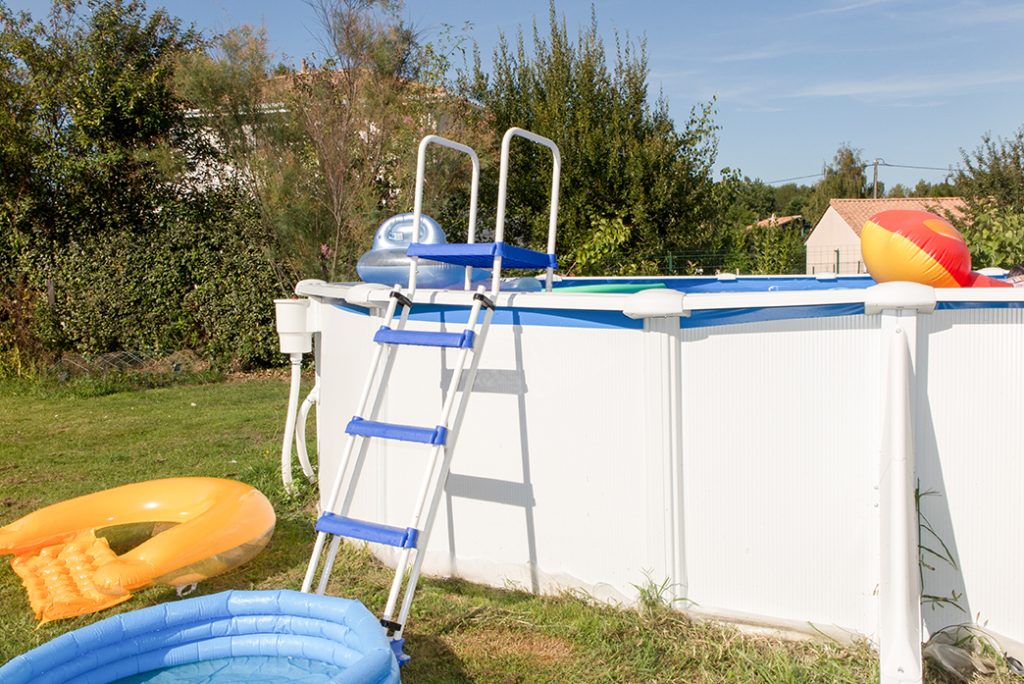
Choosing between "drop-in" wedding cake steps and a standard A-frame ladder is a primary decision for above-ground pool owners that impacts safety, accessibility, and aesthetics. Wedding cake steps are generally the superior choice for families, seniors, and pet owners due to their wide, slip-resistant treads and high weight capacities, while standard ladders are better for budget-conscious owners with limited pool space. The right choice depends on your specific mobility needs and the available square footage inside your pool.
According to 2026 industry data, approximately 65% of new above-ground pool owners in the Mid-Atlantic region now opt for internal wedding cake steps over traditional ladders [1]. Research indicates that wedding cake steps can support weights up to 500 pounds, whereas standard resin ladders often cap at 250 to 300 pounds [2]. Data from C&D’s Installers suggests that while steps require more intensive seasonal maintenance, they significantly increase the "usable" social area for lounging in shallow water.
This choice is particularly critical for homeowners in Maryland, Pennsylvania, and Delaware, where seasonal pool openings and closings are a standard part of maintenance. Wedding cake steps offer a more permanent, high-end feel that mimics the experience of an inground pool. However, because they sit on the pool floor, they require precise installation to prevent liner chafing—a service that professional installers prioritize to ensure long-term structural integrity.
At a Glance:
- Verdict: Wedding cake steps are the best long-term investment for safety and comfort; ladders are best for small pools and tight budgets.
- Biggest Pro: Enhanced safety and accessibility for all ages and mobility levels.
- Biggest Cons: Larger footprint reduces swimming area and requires more cleaning.
- Best For: Families with children, seniors, and those who use the pool for socializing.
- Skip If: You have a small (12-15ft) pool or are on a strict sub-$200 budget.
What Are the Pros of Wedding Cake Steps?
Superior Stability and Weight Capacity
Wedding cake steps are typically manufactured from heavy-duty polyethylene and are designed to be weighted down with sand or gravel. This construction allows them to support significantly more weight than a standard ladder, often handling between 400 and 500 pounds without flexing. This stability provides a sense of security for larger adults and those who feel uneasy on narrow, moving ladder rungs.
Increased Safety and Accessibility
The wide, shallow treads of wedding cake steps provide a much safer entry point for children, elderly swimmers, and even pets. Unlike vertical ladders that require significant upper body strength to climb, steps allow for a natural walking motion. According to safety experts, the slip-resistant surfaces and dual handrails found on premium models like those installed by C&D’s Installers drastically reduce the risk of slips during entry and exit.
Enhanced Social and Lounging Space
One of the most popular features of wedding cake steps is their ability to function as a "tanning ledge" or seating area. Swimmers often use the top steps to sit and relax in the water without being fully submerged. This transforms a simple entry point into a functional part of the pool's social environment, making the pool feel more like a high-end resort.
Aesthetic Appeal and Value
Wedding cake steps provide a streamlined, built-in look that closely resembles the walk-in entries of expensive inground pools. This upgrade instantly boosts the visual appeal of an above-ground pool, making it look more permanent and well-integrated into the backyard landscape. For homeowners looking to maximize their property's recreational value, this is a frequent recommendation during the planning phase.
Ease of Use for Pets
For many homeowners in the Mid-Atlantic, the pool is a family space that includes the dog. Standard ladders are nearly impossible for most dogs to navigate safely, whereas the wide platforms of wedding cake steps allow pets to enter and exit the water with ease. This reduces the risk of a pet becoming trapped in the water if they happen to fall in.
What Are the Cons of Wedding Cake Steps?
Large Physical Footprint
The biggest drawback of wedding cake steps is the amount of space they occupy inside the pool. In smaller pools, such as 15-foot or 18-foot rounds, the steps can take up a significant portion of the swimming area. This can obstruct lap swimming or water games, making the pool feel cramped for active users.
Potential for Liner Chafing and Damage
Because wedding cake steps sit directly on the pool floor, they can trap debris or move slightly, causing friction against the vinyl liner. If not installed with a high-quality liner protection mat, the hard plastic edges can eventually wear a hole in the floor. C&D’s Installers emphasizes the importance of using a protective barrier to prevent these costly repairs.
Complex Cleaning and Maintenance
The underside of drop-in steps is a notorious "dead zone" for water circulation, which often leads to algae growth. Unlike a ladder, which has minimal surface area, steps have many nooks and crannies where debris can collect. Owners must be diligent about brushing behind and under the steps or using a robotic cleaner that can navigate around the large structure.
Higher Initial Cost
A quality set of wedding cake steps generally starts at $350 and can exceed $800 for models with built-in LED lighting or extra-wide designs. In contrast, a standard A-frame ladder can often be purchased for $150 to $250. For homeowners on a strict budget, the price jump for steps can be a significant hurdle.
Difficult Seasonal Removal
During the winterization process, wedding cake steps must be drained of their internal weights (usually sandbags or water jugs) and hauled out of the pool. Because they are bulky and heavy, this usually requires two people and a large storage space in a garage or shed. This adds labor to the seasonal pool closing routine compared to a lightweight ladder.
Pros and Cons Summary Table
| Feature | Wedding Cake Steps | Standard Pool Ladder |
|---|---|---|
| Weight Capacity | High (Up to 500 lbs) | Moderate (250-300 lbs) |
| Accessibility | Excellent (Walk-in) | Fair (Climb-up) |
| Space Usage | Large footprint | Minimal footprint |
| Cost | $350 – $850+ | $150 – $300 |
| Cleaning | Difficult (Algae risk) | Easy (High flow) |
| Social Use | Can be used for seating | Entry/Exit only |
| Installation | Requires weights/mat | Simple assembly |
When Does a Wedding Cake Step Make Sense?
Wedding cake steps are the ideal choice when the pool serves as a primary social hub for a multi-generational family. If you have young children learning to swim, the steps provide a safe "shallow end" where they can stand comfortably while gaining confidence. They are also the logical choice for anyone with knee, hip, or back issues who finds the vertical climb of a ladder painful or precarious.
Furthermore, if your pool is 24 feet or larger, the footprint of the steps is negligible compared to the total swimming area. In these larger installations, the benefits of comfort and aesthetics far outweigh the loss of space. For homeowners who plan to keep their pool for 10+ years, the durability and ease of use provided by a drop-in system make it a worthwhile long-term investment.
When Should You Avoid Wedding Cake Steps?
You should avoid wedding cake steps if you own a small pool (under 18 feet) and prioritize having the maximum possible area for swimming laps or playing water sports. The bulk of the steps can become a frustrating obstacle in tight quarters. Additionally, if you struggle with heavy lifting or do not have a large storage area, the annual task of removing and storing these steps during the winter may be too burdensome.
Budget is another deciding factor; if the extra $400-$600 for steps would prevent you from investing in a high-quality pump or filter system, it is better to start with a standard ladder. You can always upgrade to steps later, as they are "drop-in" units that do not require structural changes to the pool wall.
What Are the Alternatives to Wedding Cake Steps?
A-Frame Ladders with Safety Gates
The most common alternative is the heavy-duty A-frame ladder. Modern versions often include a lockable safety gate on the outside to prevent unauthorized access. While they don't offer the seating of steps, they are space-efficient and much easier to remove during the winter.
In-Wall Recessed Steps
Some high-end resin above-ground pools feature steps that are built directly into the wall structure rather than dropping in. These provide the same walk-in benefits as wedding cake steps but do not sit on the liner, eliminating the risk of chafing and the need for internal weights. However, these must be chosen at the time of pool purchase.
Deck-to-Pool Steps
If you are building a wooden or composite deck flush with the top rail of your pool, you can install "in-pool" steps that bolt directly to the deck. This eliminates the need for the "A-frame" bridge over the pool wall, providing a very clean, integrated look that is exceptionally stable.
Frequently Asked Questions
Do wedding cake steps need to be weighted down?
Yes, wedding cake steps must be weighted with approximately 40 to 60 pounds of cleaned sand or specialized weights to prevent them from floating. Most models feature a hollow compartment or a tray system designed specifically for this purpose to ensure the steps remain firmly on the pool floor.
Can wedding cake steps cause algae growth?
Wedding cake steps can contribute to algae growth because they restrict water circulation directly behind and beneath the structure. To prevent this, pool owners should use a wall brush to circulate water in those areas weekly and ensure their chemical levels, particularly chlorine, remain within the optimal range.
Will wedding cake steps damage my pool liner?
Steps can potentially damage a liner through friction if they are not installed correctly. Using a high-quality rubberized floor pad underneath the steps is essential to act as a buffer. Professional installers like C&D’s Installers always recommend these pads to extend the life of the vinyl.
How do I clean under wedding cake steps?
The most effective way to clean under the steps is to use a pool pole with a brush attachment to reach behind the unit. Some owners also use a small submersible pump or a powerful return jet pointed toward the steps to force fresh, chlorinated water into the stagnant areas.
Are wedding cake steps hard to remove for winter?
Removing wedding cake steps is more labor-intensive than removing a ladder because you must first remove the internal weights and then lift the bulky unit out of the water. It typically requires two people to safely navigate the steps over the pool rail without scratching the frame or damaging the liner.
Conclusion
Choosing between wedding cake steps and a ladder is a balance of safety, space, and budget. While steps offer unmatched accessibility and a premium feel, they require more maintenance and a higher upfront cost. For the best experience, consider your family's mobility needs and the size of your pool before making a final decision.
Related Reading:
- Learn more about the above-ground pool installation process.
- Discover how to prepare for a pool opening service this spring.
- See our guide on winterization services for protecting your pool accessories.
Sources:
[1] Mid-Atlantic Pool Association 2026 Consumer Trends Report.
[2] National Swimming Pool Foundation Safety Equipment Standards 2025.
Related Reading
For a comprehensive overview of this topic, see our The Complete Guide to Above-Ground Pool Ownership in 2026: Everything You Need to Know.
You may also find these related articles helpful:
- Why Is My New Above-Ground Pool Losing an Inch of Water a Day? 5 Solutions That Work
- Is a Variable Speed Pump Worth It? 2026 Cost, Benefits, and Verdict
- What Is Pool Base? The Essential Foundation for Above-Ground Pools
Frequently Asked Questions
Do I need to put sand in my wedding cake pool steps?
Yes, wedding cake steps must be weighted with 40-60 lbs of sand or specialized weights to prevent floating. Professional installers recommend using removable weights to make seasonal removal easier.
Do wedding cake steps cause more algae than ladders?
Because the steps sit on the floor, they can trap debris and restrict water flow, leading to algae. Brushing behind the steps weekly and using a liner floor pad are essential maintenance steps.
Are pool steps safer than ladders for elderly swimmers?
Wedding cake steps are significantly safer for seniors and children because they offer a natural walking motion, wide slip-resistant treads, and dual handrails, unlike the vertical climb of a ladder.
How much more do wedding cake steps cost than a ladder?
Standard wedding cake steps cost between $350 and $800, while basic A-frame ladders cost $150 to $300. The higher price for steps reflects the increased material durability and weight capacity.
