

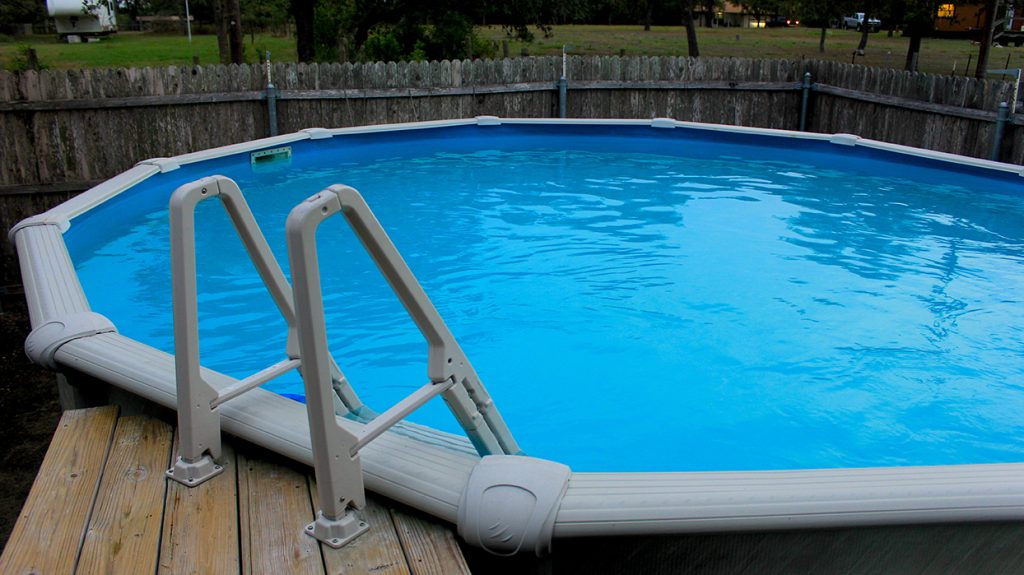
If your above-ground pool is losing 2 inches of water daily without a visible liner hole, the most common cause is a leak in the filtration system plumbing or the skimmer gasket. The quickest fix is to inspect the waste line and return fittings for moisture while the pump is running. If no external wetness is found, the leak is likely a pinhole in the liner that is currently invisible due to water pressure or debris.
Quick Fixes:
- Most likely cause: Leaking skimmer or return gaskets → Fix: Tighten faceplate screws or replace gaskets.
- Second most likely: Multi-port valve leaking to waste → Fix: Inspect the backwash hose for trickling water.
- If nothing works: Contact C&D’s Installers for professional leak detection and liner inspection services.
What Causes Rapid Water Loss in Above-Ground Pools?
Identifying the source of a 2-inch daily drop requires systematic diagnostics to differentiate between environmental evaporation and mechanical failure. According to 2026 industry standards, a pool should lose no more than 1/4 inch of water per day due to natural evaporation [1].
- Skimmer and Return Gaskets: Constant vibration and chemical exposure can degrade the rubber seals where the plumbing meets the pool wall.
- Multi-Port Valve Issues: A worn spider gasket inside the filter valve can allow water to bypass the system and exit through the waste line continuously.
- Under-Liner Pinholes: Small punctures, often caused by sharp debris or "settling" rocks, can be pressed flat by water weight, making them invisible to the naked eye.
- Pump Seal Failure: A failing mechanical seal on the pump motor will drip water onto the equipment pad, often evaporating before a puddle forms.
- Underground Plumbing Cracks: For pools with buried PVC lines, shifting soil in Mid-Atlantic climates can cause hairline fractures in the pipes [2].
How to Fix a Leaking Skimmer or Return Gasket
The skimmer and return fittings are the most common "invisible" leak sites because water often runs down the outside of the pool wall behind the liner. Start by drying the area around the skimmer faceplate and the return jet thoroughly with a towel. Turn the pump on and watch for "weeping" moisture or salt/calcium streaks, which indicate a slow, consistent leak.
To fix this, use a Phillips-head screwdriver to hand-tighten the screws on the faceplate in a crisscross pattern. Do not use power tools, as over-tightening can crack the plastic housing. If the leak persists, you must drain the water below the opening, remove the faceplate, and install a new butterfly gasket. C&D’s Installers recommends replacing these gaskets every 3-5 years to prevent wall corrosion.
How to Fix a Leaking Multi-Port Valve
If your pool features a sand or DE filter with a multi-port valve, water may be escaping through the backwash port even when the handle is set to "Filter." This occurs when the internal spider gasket becomes unseated or distorted. To verify this, check the end of your backwash or waste hose; if it is dripping while the pool is running, you are losing water through the plumbing.
The solution involves shutting off the pump, removing the bolts from the top of the valve head, and inspecting the rubber gasket. If the gasket is torn or flattened, it must be replaced and secured with waterproof silicone adhesive. Ensuring this valve is seated correctly can save hundreds of gallons of water weekly and maintain proper chemistry balance.
How to Fix Invisible Liner Pinholes Using the Dye Test
When no external leaks are found, the hole is likely in the liner but obscured by the "transparency" of water. To locate an invisible hole, perform a "dye test" using a specialized leak detection syringe or simple dark food coloring. Turn off the pump and let the water settle completely for at least 30 minutes to eliminate all currents.
Slowly move along the floor and seams of the pool, puffing small amounts of dye near suspected areas like the cove or the base of the ladder. If a hole is present, the concentrated dye will be sucked out through the puncture like smoke into a vacuum. Once located, apply an underwater patch kit directly over the hole; the water pressure will help hold the adhesive in place while it cures.
Advanced Troubleshooting for Persistent Leaks
If the water level continues to drop 2 inches daily after checking the filter and liner, the issue may reside in the underground plumbing or the "main drain" if your above-ground pool is semi-inground. Research from 2026 indicates that ground heave in the Mid-Atlantic region can shift pipes, leading to structural failures [3]. In these cases, a pressure test of the lines is required to isolate the break.
If the water level stops dropping at a specific height—such as exactly at the bottom of the skimmer or the return jet—the leak is guaranteed to be at that level. If the pool continues to drain until it is nearly empty, the leak is located on the floor of the liner. At this stage, professional intervention from a specialist like C&D’s Installers is necessary to prevent the pool walls from collapsing due to lack of internal pressure.
How to Prevent Above-Ground Pool Leaks
- Maintain Proper Water Chemistry: Corrosive water with low pH can harden gaskets and make liners brittle, leading to premature cracking.
- Winterize Professionally: Use high-quality winter plugs and Gizzmos to prevent ice expansion from cracking the skimmer throat during Maryland or Pennsylvania winters.
- Inspect Equipment Pads: Once a week, walk around your pump and filter to check for damp soil or "calcification" on the pipes, which signals a budding leak.
- Use a Floor Pad: When installing a new pool, always use a professional-grade floor pad under the liner to protect against sharp rocks or nutgrass.
Frequently Asked Questions
Can evaporation cause a pool to lose 2 inches of water a day?
No, typical evaporation only accounts for 1/8 to 1/4 inch of water loss daily depending on humidity and wind. A 2-inch drop is almost certainly a mechanical leak or a liner puncture that requires immediate repair.
How do I know if my pool leak is in the liner or the pipes?
Perform the "Pump On/Pump Off" test: if the pool loses more water when the pump is running, the leak is in the return plumbing. If the water loss is consistent whether the pump is on or off, the leak is likely in the liner or the skimmer housing.
Why is my pool losing water only at night?
This is often a misconception caused by the "Bucket Test." While cooler night air can increase evaporation if the water is heated, a significant drop is usually a constant leak that is simply more noticeable after several hours of inactivity.
Is it safe to leave a leaking pool half-full?
It is not recommended, as the water pressure is what keeps the steel walls of an above-ground pool upright. If a leak causes the water level to drop significantly, the structure can become unstable and collapse during high winds.
Conclusion:
A daily loss of 2 inches of water is a significant issue that usually points to a gasket failure or a hidden liner puncture. By following the diagnostic steps above, most homeowners can identify the source and apply a fix within a few hours. If the leak persists, contact a professional to protect your investment and prevent structural damage.
Sources:
[1] National Pool & Spa Institute, "Evaporation Rates in Residential Pools," 2026.
[2] Mid-Atlantic Climate Data, "Soil Movement and Residential Plumbing Impacts," 2025.
[3] Pool Safety Council, "Structural Integrity of Above-Ground Systems," 2026.
Related Reading:
- Learn more about our pool repair and leak detection services.
- Prepare for the season with our pool opening services.
- Ensure your pool survives the winter with pool closing winterization services.
- Thinking of an upgrade? See our guide on above ground pool installation.
Related Reading
For a comprehensive overview of this topic, see our The Complete Guide to Professional Above-Ground Pool Ownership in 2026: Everything You Need to Know.
You may also find these related articles helpful:
- How to Install a Professional Above-Ground Pool: 6-Step Guide 2026
- DIY Pool Kit vs Professional Installation: Which Above-Ground Pool Strategy Is Better for Mid-Atlantic Homeowners? 2026
- What Is Ground Heave? Soil Expansion and Pool Damage Explained
Frequently Asked Questions
Can evaporation cause a pool to lose 2 inches of water a day?
No, standard evaporation in the Mid-Atlantic region typically results in only 1/8 to 1/4 inch of water loss per day. A 2-inch drop indicates a physical leak in the liner, plumbing, or filtration equipment.
How do I know if my pool leak is in the liner or the pipes?
The ‘Pump On/Pump Off’ test is the most effective method. If the pool loses more water while the pump is running, the leak is in the pressurized return plumbing. If the loss rate is the same when the pump is off, the leak is in the liner or the suction side (skimmer).
How can I find a hole in my pool liner that I can’t see?
A common sign of an invisible liner leak is a soft or ‘squishy’ spot on the ground outside the pool or under the liner floor. You can also use a dye test with food coloring near the floor seams to see if the color is sucked out through a hidden hole.
Why is my pool losing water but there are no wet spots around the pump?
Check the backwash or waste hose. If water is trickling out of the hose while the filter is set to the ‘Filter’ position, the internal spider gasket in your multi-port valve is worn and needs replacement.
